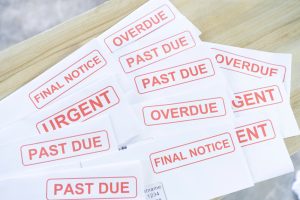
Every year, financial writers caution people against overspending at Christmas. Also every year, people end up overspending at Christmas. They then have to deal with the outcome of this in the new year. If this sounds like you (or someone you know), here are some tips to help.
Assess your financial situation
Realistically, how serious is your debt situation? Is it really just some Christmas overspending or do your debt issues stretch back (well) beyond that? If you’re sure you just lost control a bit at Christmas, then it should be relatively easy for you to get back on track. If, however, your problems are more serious, then it could be advisable to get professional help.
Put your credit cards out of sight
Credit cards definitely have legitimate uses. They can, however, also be very easy to overuse. If you’re serious about tackling post-Christmas debt, try putting them somewhere safe but out of the way. You’ll still be able to get them if you really need them. At the same time, you won’t just be able to reach for them on auto-pilot.
Investigate your credit options
More specifically, look for low-cost credit options, especially niche ones. A lot of Christmas spending ends up on credit/store cards. With these products, the issue is often not the amount borrowed. It’s the interest charged.
If you know you’re going to need time to repay your debt, then it can be very worthwhile to look for lower-cost options. These can include regular personal loans, balance-transfer cards, loans from credit unions and peer-to-peer (p2p) loans.
Challenge yourself to have a no-spend month
A no-spend month is a month when you only spend money on essentials. That generally means basic consumables such as food, cleaning products and utilities. In one sense, no-spend months are the financial equivalent of a crash diet. As such, they’re unlikely to be sustainable for most people. They can, however, serve two very useful purposes.
The first is to help you get yourself back into financial shape after Christmas. Depending on the extent of your overspending, a no-spend month may be all you need to fix it. The second is to get you thinking seriously and realistically about your needs and your wants. This can open up ideas for saving money that you might not have considered before.
For example, food is a need but meat isn’t and it’s expensive. It’s therefore reasonable to ask yourself if you’re prepared to go without it, at least for a while. If you’re not, would you be prepared to cut back on it? Would you also be prepared to reassess what meat you eat? For example, would you be prepared to learn how to cook cheaper cuts and/or offal?
There are no right and wrong answers here. It’s all about what works for you (or not). You need to find your own balance between living in the present and getting out of debt.
See if you can sell off unwanted possessions
In the real world, selling off unwanted possessions is unlikely to make a meaningful impact on significant debt. It could, however, make a meaningful impact on Christmas overspending.
If you don’t think your unwanted possessions are sellable, consider whether or not they are swappable. Swaps can be a bit more complicated (and time-consuming) to organise. Even so, they can still be useful ways to save money.
See if you can bring in extra income
If you make a serious effort to bring in extra income, you will need to register for self-assessment. This is easy, it just means you’re committing to filling in tax returns. For small-scale entrepreneurs (side-hustlers), this is generally tedious but straightforward.
Getting some extra income can do a lot to clear off Christmas debts. It can also help to improve your finances in general. More specifically, it can help to keep you out of debt in future Christmases.